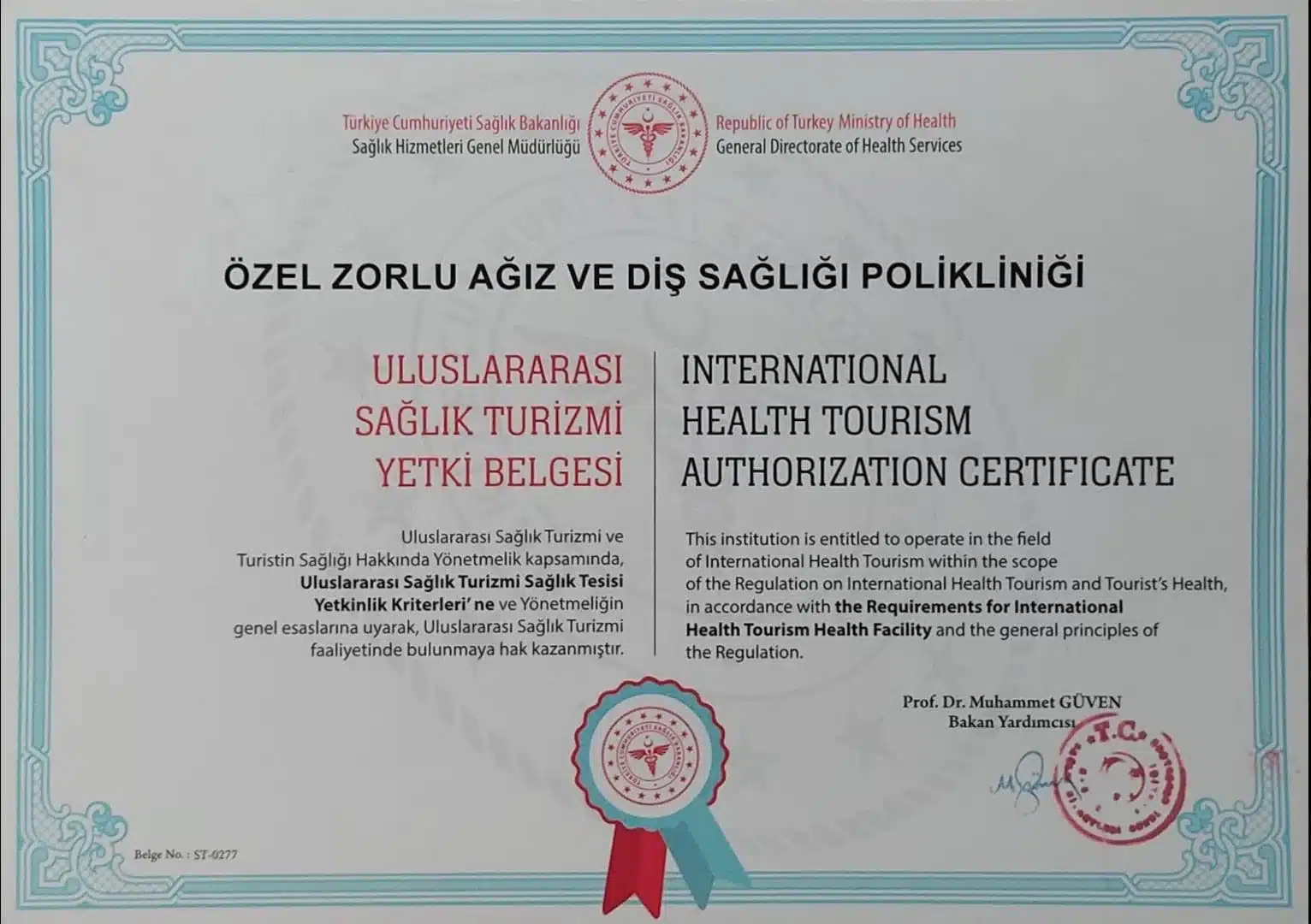
The average cost of full mouth dental implants in the United States runs between $43,000 and $56,000. In Antalya, Turkey, the same treatment costs a fraction of that — typically $3,000 to $8,000 — with no compromise on materials, technology, or clinical standards. That gap is why over 750,000 international patients travel to Turkey for dental care every year.
Whether you are dealing with multiple missing teeth, failing dentition, or ill-fitting dentures, this treatment offers the most permanent, functional, and natural-looking solution available in modern dentistry. This guide covers everything you need to make an informed decision — from what the procedure involves, to who qualifies, to what to realistically expect in terms of cost, timeline, and results.
Table of Contents
- What Are Full Mouth Dental Implants?
- All-on-4, All-on-6, or Individual Implants — Which Is Right for You?
- Am I a Candidate for Full Mouth Dental Implants?
- The Full Mouth Implant Procedure: Step-by-Step
- Full Mouth Dental Implants Cost: Turkey vs. UK & USA
- Why Choose Antalya for Your Full Mouth Implants?
- Materials: Zirconium vs. Acrylic Bridges
- How to Care for Full Mouth Dental Implants
- Frequently Asked Questions
What Are Full Mouth Dental Implants?
Full mouth dental implants are a permanent tooth replacement system that restores an entire arch — upper, lower, or both — using titanium posts surgically placed into the jawbone. Unlike removable dentures, which sit on the gums and rely on suction or adhesives, implants fuse directly with the bone through a process called osseointegration. This creates a foundation as stable and load-bearing as a natural tooth root.
The most significant advantage beyond aesthetics is bone preservation. When teeth are lost, the jawbone begins to shrink because it no longer receives stimulation. Implants restore that stimulation, maintaining bone volume and preventing the facial collapse associated with long-term denture use.
According to data from the US dental industry, the national average success rate for dental implant procedures is 97%, and 90–95% of implants last 20 or more years with proper maintenance. For patients with severe tooth loss or full edentulism, full mouth implants represent a genuine lifetime investment in health, function, and confidence.
All-on-4, All-on-6, or Individual Implants — Which Is Right for You?
Not all implant solutions are the same. The right approach depends on your bone density, budget, and treatment goals. Here is how the main options compare.
All-on-4 Implants
All-on-4 uses four titanium posts per arch, with the two rear implants angled at up to 45 degrees to maximize contact with available bone. This makes it suitable even for patients with moderate bone loss — often eliminating the need for bone grafting. A temporary full-arch bridge can be fitted on the same day as surgery, giving patients functional teeth immediately. Long-term clinical studies report an All-on-4 implant survival rate of 98.8%, making it one of the most evidence-backed full mouth implant techniques available.
All-on-6 Implants
All-on-6 uses six implants per arch, placed more evenly across the jaw. The additional implants distribute bite force more broadly, which can improve long-term stability and reduce strain on individual posts. Patients with higher bone density or those who need stronger support for a heavier prosthetic bridge are often better suited to All-on-6. Evidence suggests that All-on-6 delivers fewer prosthetic complications over time, though the procedure costs more and requires more surgical sites.
Individual Full Mouth Implants
Placing individual implants for every missing tooth — typically 8 to 10 per arch — provides the highest level of stability and independence. If one implant or crown needs attention, the others are unaffected. This approach is the most expensive and involves the longest treatment timeline, but for patients with excellent bone density and the budget to match, the results are exceptional.
Explore the holistic dental implants approach at Center Dental Clinic to understand which option aligns with your specific anatomy and goals.
Am I a Candidate for Full Mouth Dental Implants?
Full mouth dental implants are not suitable for everyone without assessment, but the eligibility criteria are broader than many patients expect. Here is what a clinical evaluation typically considers.
Core requirements:
- General health — Patients should be free of uncontrolled conditions such as unmanaged diabetes, active cancer treatment, or severe autoimmune disorders, as these can impair healing.
- Bone density — Sufficient jawbone volume is needed for implants to integrate properly. Bone density directly affects implant stability from the moment of placement.
- Gum health — Active periodontal (gum) disease must be treated and resolved before implant surgery. Healthy gum tissue is the long-term gatekeeper that protects the implant from bacterial infiltration.
- Non-smoking or willingness to quit — Smoking significantly impairs blood flow to the gums and slows osseointegration. Most implant clinics strongly advise patients to stop smoking for at least 10 days before and after surgery, and ideally to quit entirely.
What if you have bone loss?
Moderate bone loss does not automatically disqualify you. The angled placement technique used in All-on-4 specifically addresses reduced bone volume in the posterior jaw. For patients with more significant bone deficiency, bone grafting — using natural or synthetic bone material to rebuild the jaw — can restore sufficient density for implant placement, though it adds 4–9 months to the overall timeline.
A comprehensive consultation including panoramic X-rays and a 3D CT scan is the only reliable way to determine your candidacy. Book your consultation at Center Dental Clinic to get a personalised assessment.
The Full Mouth Implant Procedure: Step-by-Step
Understanding the implant process reduces anxiety and sets realistic expectations. Here is what most patients experience from first appointment to final smile.
Step 1 — Consultation and 3D Imaging
The process begins with a comprehensive consultation, panoramic X-ray, and CT scan. These images reveal bone density, sinus anatomy, nerve positions, and existing tooth condition — all essential for precise implant planning.
Step 2 — Extractions
The surgical team removes any remaining failing or damaged teeth. The dentist may perform extractions at the same appointment as implant placement (immediate placement) or schedule a separate session to allow initial healing.
Step 3 — Bone Grafting (if required)
Patients who lack sufficient bone volume undergo grafting before implant placement. Socket grafts (minor, single-site grafts) typically heal in 8–12 weeks. Block grafts or sinus lifts, which address larger areas of bone loss, may require 4–9 months of healing before implants can be placed safely.
Step 4 — Implant Placement
The surgeon places titanium posts into the jawbone under local anaesthesia, with sedation available for anxious patients. For All-on-4 cases, the clinic fits a temporary full-arch bridge the same day, so patients leave with functional teeth immediately.
Step 5 — Osseointegration
Over the following 4–6 months, the titanium fuses with the surrounding bone in a process called osseointegration. This biological bonding is what gives implants their exceptional stability and longevity. Patients wear temporary teeth during this period.
Step 6 — Final Prosthetic Fitting
Once the scan confirms osseointegration, your dentist fits, adjusts, and polishes the permanent prosthetic bridge — typically zirconium or high-grade acrylic — to match your exact bite and aesthetic preferences.
The total timeline from initial consultation to final prosthetic runs 5 months to over a year, depending on whether bone grafting is needed and how quickly each patient heals individually.
Full Mouth Dental Implants Cost: Turkey vs. UK & USA
Cost is the single biggest factor for most full mouth implant patients, and the international comparison is striking.
| Location | Full Mouth Implants (Both Arches) |
|---|---|
| United States | $43,000 – $56,000 |
| United Kingdom | £20,000 – £50,000 |
| Turkey (Antalya) | $3,000 – $8,000 |
The difference is driven not by lower standards but by lower overhead costs — staffing, laboratory fees, and clinic operations are all significantly cheaper in Turkey than in the US or UK. High patient volume also allows clinics to price competitively without sacrificing materials or equipment quality.
What Turkey packages typically include:
- All implant posts and prosthetic components
- Temporary teeth on day of surgery
- Panoramic X-rays and CT scanning
- All consultations and follow-ups during your stay
- Hotel accommodation and airport transfers (in all-inclusive packages)
- All medications prescribed for your recovery
Most patients fund their treatment with personal savings or financing. In the US, 92% of dental implant patients use payment plans, with monthly instalments typically ranging from $250 to $900. At Turkish prices, the same outcome is often achievable outright.
Explore the dental services at Center Dental Clinic and request a personalised quote based on your specific treatment needs.
Why Choose Antalya for Your Full Mouth Implants?
Antalya has become one of Europe’s leading dental tourism destinations — and for good reason. The city combines accessible international flights, a flourishing medical infrastructure, and some of Turkey’s most established implant clinics.
Modern clinics in Antalya use the same implant systems as Europe and the US — Nobel Biocare, Straumann, and Zimmer Biomet are all widely available. The clinical staff at leading clinics are university-trained, often with postgraduate qualifications from European institutions, and experienced in treating international patients who arrive speaking English, German, Russian, and a range of other languages.
The appeal extends beyond the clinic. Patients who travel to Antalya for their implant treatment can combine their initial consultation trip with a stay on the Turkish Mediterranean coast — and many do, scheduling their visit as part of a broader holiday. The recovery period, which for All-on-4 patients involves minimal downtime, lends itself to light sightseeing and rest in one of Turkey’s most scenic regions.
The T.C. Ministry of Health — Health Türkiye provides official information on accredited health facilities and patient rights for international visitors seeking treatment in Turkey.
For patients seeking a patient-centred, holistic approach to full mouth implants, Center Dental Clinic’s implant programme is designed specifically with international patients in mind.
Materials: Zirconium vs. Acrylic Bridges
The prosthetic bridge — the visible teeth that attach to your implants — can be made from two primary materials, each with distinct advantages.
Zirconium (Zirconia) Bridges
Zirconium is a high-strength, metal-free ceramic that closely mimics the translucency and colour gradients of natural teeth. It is biocompatible, meaning it generates no allergic or chemical reactions in the surrounding tissue. Zirconium bridges are more durable than acrylic, more resistant to staining, and require less maintenance over time. They are the preferred choice for patients prioritising long-term aesthetics and longevity.
Acrylic Bridges
Acrylic is lighter and less expensive than zirconium, and it is easier to repair if damaged. For patients who opt for a phased approach — starting with a lower-cost option before upgrading — acrylic provides a functional and reasonably aesthetic interim solution.
Most patients undergoing full arch restoration in Antalya choose zirconium for their permanent bridge. You can learn more about the clinical properties and advantages of zirconium crowns and how they apply to full arch restorations.
If you are considering a complete aesthetic transformation alongside your implants, the Hollywood Smile programme combines implants, veneers, and smile design into a single treatment plan.
How to Care for Full Mouth Dental Implants
Full mouth dental implants can last a lifetime — but only with consistent, attentive care. The first few weeks after surgery and your long-term daily habits both have a direct impact on implant longevity.
Immediate post-operative care (first 1–2 weeks):
- Follow a soft diet — yogurt, soup, mashed vegetables, and smoothies. Avoid anything hard, crunchy, or sticky.
- Apply an ice pack to the face for 10 minutes on, 20 minutes off during the first 48 hours to manage swelling.
- Do not smoke for at least 10 days. Nicotine restricts blood flow and significantly slows osseointegration.
- Avoid spitting, straws, and strenuous physical activity in the first 24–48 hours.
- Take all antibiotics and anti-inflammatory medication your dentist prescribes, exactly as directed.
Long-term daily care:
- Use a soft-bristle or electric toothbrush to clean around implants and gum margins twice daily.
- Use implant-specific floss or a water flosser to clean the spaces between implants and along the gum line. Standard floss can catch on prosthetic components.
- Rinse with an antimicrobial mouthwash to reduce bacterial build-up and lower the risk of peri-implantitis — the most common cause of implant failure.
- Attend professional check-ups every 6 months. Your dentist will assess implant stability, check for early signs of complications, and perform professional cleaning around the prosthetic components.
With this level of care, the titanium implant posts are designed to last a lifetime. The prosthetic bridge — whether zirconium or acrylic — typically lasts 10–20 years before replacement may be considered.
Conclusion
Full mouth dental implants are the most comprehensive, durable, and life-changing solution for patients facing significant tooth loss. They restore not just the appearance of teeth, but the full function of a natural bite — the ability to eat freely, speak confidently, and smile without reservation.
The key points to carry forward: All-on-4 and All-on-6 offer evidence-backed full arch solutions at different price and bone-density points; candidacy is determined by a clinical evaluation, not assumption; the procedure takes time but delivers permanent results; and choosing Antalya as your treatment destination can reduce costs by 70–85% without compromising on materials, technology, or clinical expertise.
Full mouth dental implants in Turkey are not a shortcut — they are the same world-class treatment, delivered in a modern clinical environment, at a price that makes it accessible to far more patients than it would be at home.
Book your no-obligation consultation at Center Dental Clinic and take the first step toward a permanent, healthy, natural-looking smile.
Frequently Asked Questions
What is the difference between All-on-4 and full mouth dental implants?
All-on-4 is a specific full arch technique using four angled implants per arch. “Full mouth dental implants” is a broader category that includes All-on-4, All-on-6, and individual implant-per-tooth restorations across both arches. All-on-4 is the most common technique chosen for its efficiency and suitability for patients with moderate bone loss.
How much do full mouth dental implants cost in Turkey?
Full mouth dental implants in Turkey typically cost between $3,000 and $8,000, compared to $43,000–$56,000 in the United States. All-inclusive packages in Antalya frequently include hotel accommodation, airport transfers, X-rays, temporary teeth, and all clinical consultations during the treatment stay.
Am I a good candidate for full mouth dental implants?
Good candidates are in generally good health, have sufficient jawbone density, and have gums free of active periodontal disease. Patients with moderate bone loss may still qualify with bone grafting. Smokers are strongly advised to quit before treatment. A consultation with full 3D imaging is the only accurate way to assess candidacy.
How long does the full mouth implant process take?
The process typically takes between 5 months and over a year from first consultation to final prosthetic fitting. All-on-4 patients receive temporary teeth on the day of surgery. Patients requiring bone grafting face an additional 4–9 months of healing before implants can be placed.
How long do full mouth dental implants last?
The titanium implant posts are designed to last a lifetime with proper care. The prosthetic bridge lasts 10–20 years depending on material (zirconium lasts longer than acrylic) and daily maintenance habits. Regular 6-month professional check-ups are the single most important factor in long-term implant success.